
11 Sep The Role of Employee Health Management Software in Workplace Wellness
Employee health plays an important role in maintaining a safe, productive, and efficient workplace. Organizations operating manufacturing plants, chemical industries, pharmaceutical companies, engineering units, logistics facilities, construction sites, and corporate workplaces need an effective way to manage employee medical information and occupational health activities. Managing these processes through paper records and spreadsheets can become complicated as the workforce grows. Employee Health Management Software provides a digital solution for organizing employee health information, medical checkups, occupational health activities, and reporting.
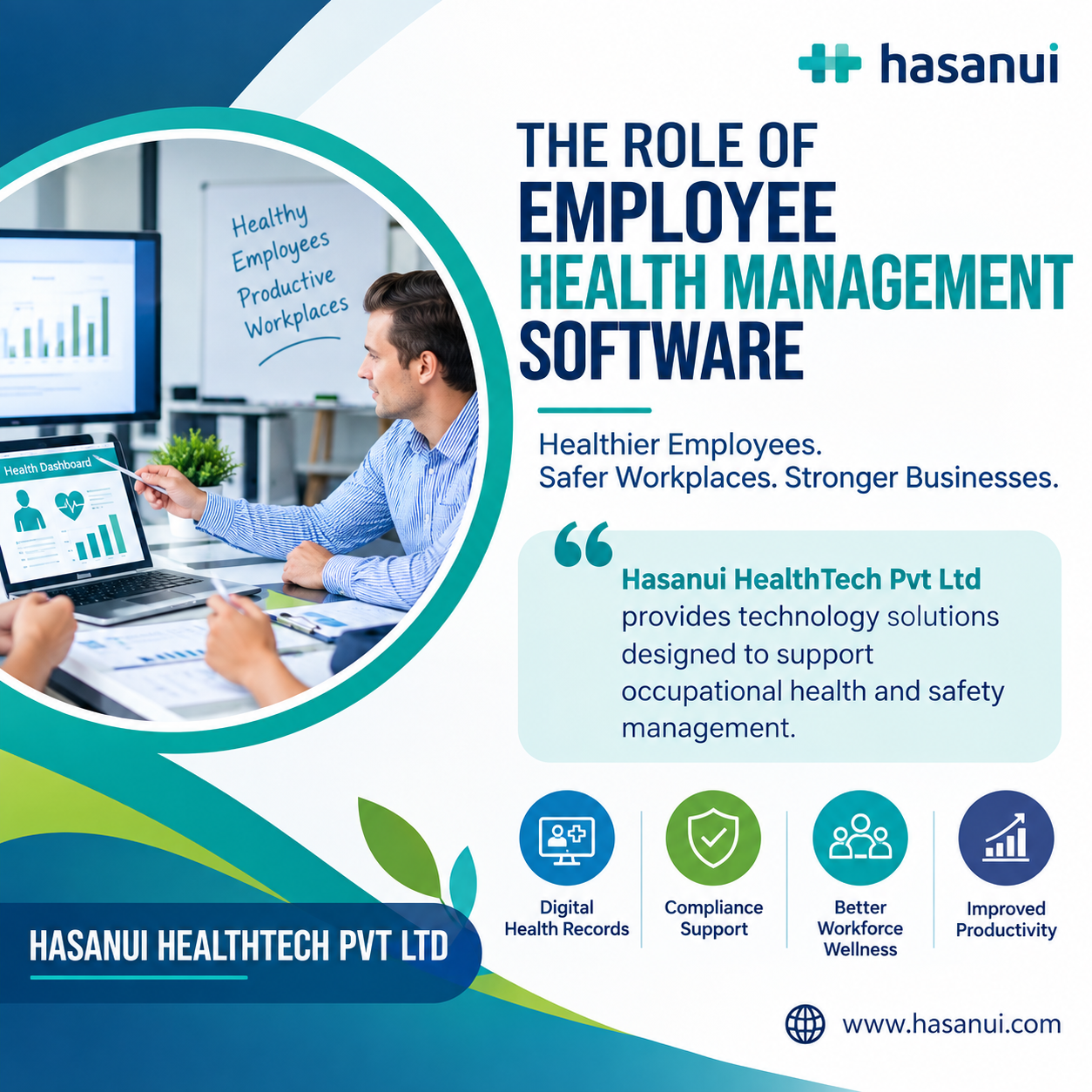
Hasanui HealthTech Pvt Ltd provides technology solutions designed to support occupational health and safety management. Its employee health management approach helps organizations move from manual recordkeeping toward a more structured and efficient digital health management process.
Centralized Employee Health Records
One of the major benefits of employee health management software is centralized data management. Employee medical records, pre-employment examination details, periodic health checkups, laboratory results, fitness information, consultation records, and other relevant health data can be maintained digitally.
A centralized system allows authorized users to access required information quickly instead of searching through physical files or multiple spreadsheets. This can improve record accuracy while reducing administrative workload for occupational health teams.
Simplifying Pre-Employment and Periodic Medical Checkups
Many industries conduct health examinations before employees join the organization and periodically during employment. These assessments may include medical examinations, vision and hearing tests, spirometry, ECG, X-ray, laboratory investigations, and other occupational health assessments based on workplace requirements.
Employee Health Management Software can help occupational health teams organize examination schedules, record results, monitor pending assessments, and maintain employee medical histories. Automated reminders can also help organizations follow up on upcoming or overdue health checkups.
Supporting Occupational Health and Safety
Workplace health management is closely connected with occupational safety. Employees working around chemicals, dust, noise, heat, machinery, hazardous materials, or other workplace risks may require appropriate health surveillance.
Digital software can help organizations maintain health surveillance information and identify trends that may require attention. By combining employee health information with occupational health processes, organizations can make more informed decisions regarding workplace wellness and preventive healthcare.
Improving OHC Operations
An Occupational Health Centre (OHC) often manages registrations, consultations, first-aid cases, medical examinations, prescriptions, laboratory investigations, referrals, and follow-ups. Handling these activities manually can consume considerable time.
Employee health management software can streamline OHC workflows by digitizing important processes. Healthcare personnel can record consultations and medical activities systematically, while management can obtain reports and operational information when required.
Better Reporting and Compliance Management
Organizations need accurate documentation to support internal reviews, statutory requirements, and audits. Searching for historical health records manually can be difficult when information is distributed across different files and departments.
A digital employee health management system can provide structured reports and dashboards covering medical examinations, employee health status, pending checkups, occupational health activities, and other relevant information. This can help organizations maintain more organized documentation and improve audit readiness.
Enhancing Employee Wellness
Employee health management should not focus only on treating illness. Preventive healthcare and wellness monitoring can also contribute to a healthier workforce. By tracking health assessments and identifying recurring trends, organizations can develop better wellness initiatives and encourage employees to pay attention to their health.
Health data can support initiatives such as periodic screenings, health awareness programs, preventive assessments, and workplace wellness activities.
Secure and Organized Digital Data
Medical information is sensitive and should be handled carefully. A well-designed health management platform can provide controlled access and organized digital storage so that authorized personnel can manage employee information appropriately.
Role-based access can help ensure that different users receive access according to their responsibilities, supporting better data management across HR, occupational health, medical, safety, and administrative teams.
Conclusion
Employee Health Management Software can transform the way organizations manage workplace healthcare. From maintaining digital employee medical records and scheduling periodic health checkups to supporting OHC operations, reporting, health surveillance, and compliance activities, a centralized platform can improve efficiency and organization.
Hasanui HealthTech Pvt Ltd helps organizations adopt technology-driven approaches to occupational and employee health management. For businesses looking to reduce manual processes, improve health data visibility, and build a more organized workplace healthcare system, employee health management software can be an important step toward a safer, healthier, and more productive workplace.
Sorry, the comment form is closed at this time.